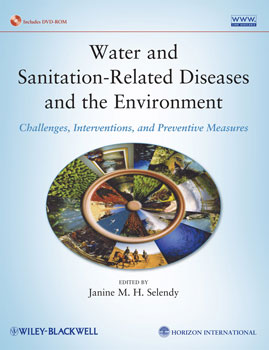
Written by 59 authorities from various related specialties, this book presents the most the conditions responsible for water- and sanitation-related diseases, the pathogens and their biology, morbidity and mortality resulting from lack of safe water and sanitation, distribution of these diseases, and the conditions that must be met to reduce or eradicate them. Preventive measures and solutions are presented throughout.” Michele Barry, Jay Graham, Robert S. Lawrence, Lora E. Fleming, Julio Frenk, and Robert J. Wyman, are among its authors. Janine M. H. Selendy is Editor.
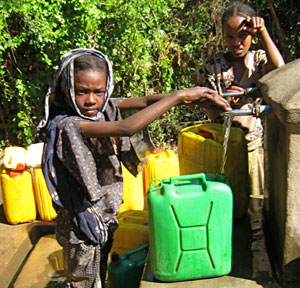
Young girls collecting water (East Hararghe, Ethiopia). Photograph by Jay Graham
As we write in the book: Meeting the need for safe water and sanitation coupled with protection of the environment and prevention of pollutants is essential to improve the health and living conditions of billions of people -- to diminish the incidence of diseases while improving education and economic well-being and elevating billions out of vicious cycles of poverty.
Courtesy Dr. Lauren Gerson, Stanford University School of Medicine.
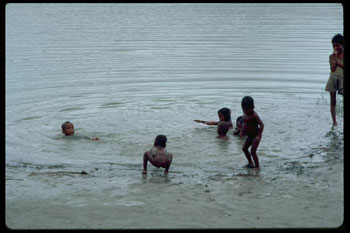
Children playing in pond in Bangladesh. Defecating in water is a frequent cause of disease transmission. Shigellosis, the archetype of a disease resulting from poor personal and environmental hygiene and sanitation, causes an estimated more than 1,000,000 deaths a year. It was the second most common cause of diarrhea among U.S. military personnel during the recent Iraq war. (Source: Michael L. Bennish and M. John Albert, “Shigellosis,” a chapter in "Water and Sanitation Related Diseases and the Environment: Challenges, Interventions and Preventive Measures, published by Wiley-Blackwell in collaboration with Horizon International)
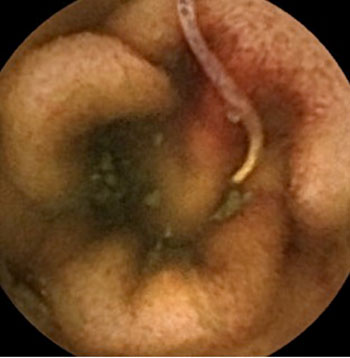
Hookworm in intestine.
"Soil-transmitted helminths [parasitic worms] are among the most common human parasites globally. Over a billion people are infected with at least one of these worms, and many harbor infection with multiple species. It is thought that approximately a billion people are infected with Ascaris, about 800 million with Trichuris, and about 700 million with hookworm.” From the chapter “Soil-Transmitted Helminths: Ascaris, Trichuris, and Hookworm Infections,” by Brian G. Blackburn and Michelle Barry.
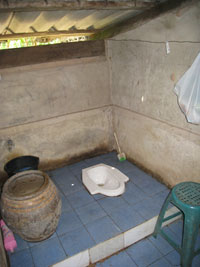
Pour-flush toilet in Thailand. Photograph by Jay Graham
“The book is certainly an excellent resource for anyone interested in health in developing countries. Best wishes with the next steps on the supplementary material and all your efforts.” – Wafaie Fawzi, Richard Saltonstall Professor of Population Sciences, and Professor of Nutrition, Epidemiology, and Global Health, and Chair, Department of Global Health and Population, Harvard School of Public Health, 28 September 2012
Harbor seal mother and pup.
Photograph by Cynthia Stroud
Popular versions of the book (for the very young, middle aged youth, and general older audiences), television program or series, new use of online education applications and other means of effectively sharing and building on the knowledge from our publication, are now being pursued.
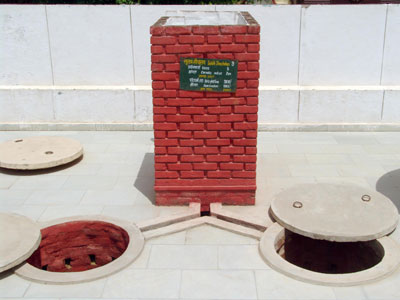
The Sulabh twin-pit, pour-flush, compost toilet - a simple solution to achieve the Millennium Development Goal on Sanitation
In India, the Sulabh Organization has built more than 1.2 million two-pit pour-flush toilets that are eco-friendly, technologically appropriate, socio-culturally acceptable, and affordable.
Views of the Sulabh Toilet Complex in Pradesh, India
Sulabh Organization has built over 7,000 pay-for use public toilet complexes with bathrooms, lockers, and private toilets that treat wastewater, and produce biogas for agriculture and horticulture. Combined these facilities serve more than 10 million people daily.
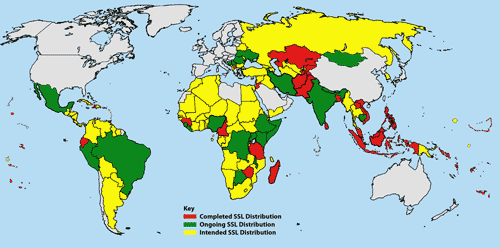
Click on the map to enlarge.
"Global changes today will lead to continued changes in the geographic distribution of vectors and the diseases that they spread among humans, animals, and plants." Mary Wilson, M.D.
Water tanks in slum areas.
Photograph by Felix Lam
The book’s DVDs were designed for use as teaching tools in classrooms and communities, by organizations, researchers and policy makers. They contain 16 videos and 4 short-clip videos. For example, videos on water treatment and safe storage, successful household-centered sanitation systems, measures to prevent water pollution, dengue, cholera, schistosomiasis and trachoma, and the successful effort leading to the eradication Guinea worm disease. They also contain 525 illustrations, tables, and maps from the text, chapter abstracts written specifically for the DVDs, and text content and images not found in the book.
The book’s DVD contents are described in the insert that accompanies the DVDs. It is available at this link.
The book’s DVD contents are described in the insert that accompanies the DVDs. It is available at this link.
You can also click on the picture to go to the flyer.
Guinea worm eradication over time.
Portable pipe filters.
Photograph courtesy The Carter Center/Emily Staub
Guinea Worm's Last Stand
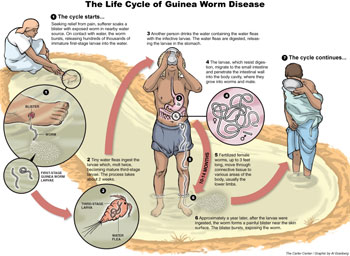
Guinea worm disease - spread by infected humans washing or bathing in water is among the “neglected tropical diseases.” The neglect arises because the people most affected by these diseases are the world’s most impoverished, particularly those who subsist on less than $2 per day.
Guinea worm disease is propagated by infected humans washing or bathing in water, allowing the guinea worm to release its larvae that are then consumed by tiny water fleas. The flea-infested water, when consumed by humans, introduces the guinea worm larvae into a new host.
Since 1986, when there were about 3.5 million cases, the Carter Center has been leading the campaign to eradicate the disease. Today, Guinea worm is poised to become the second human disease, after smallpox, to be wiped out. From the chapter “Dracunculiasis (Guinea Worm Disease): Case Study of the Effort to Eradicate Guinea Worm,” by Donald R. Hopkins and Ernesto Ruiz-Tiben.
As of November 10, 2013, these resources have been made available in over 1,200 entities across 55 countries. The DVD contents are described in an insert that accompanies the DVDs with the SSL packets. The descriptive insert with the book’s table of contents is available here.
Emerging guinea worm
Photograph: The Carter Center/Louise Gubb
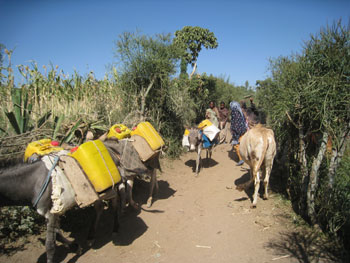
Transporting water in Ethiopia. Photograph by Jay Graham
The book was published by Wiley-Blackwell in collaboration with Horizon International.
Horizon International is contributing the DVDs as part of the resources being distributed free of charge by the Global Development And Environment Institute (GDAE) at Tufts University. These multidisciplinary resources, covering diverse topics from anthropology to economics to global health are being contributed to thousands of libraries, organizations, and institutions in 138 less-wealthy countries for use in classrooms and communities, by researchers and government decision-makers.
As of November 10, 2013, these resources have been made available in over 1,200 entities across 55 countries. The DVD contents are described in an insert that accompanies the DVDs with the SSL packets. The descriptive insert with the book’s table of contents is available here.
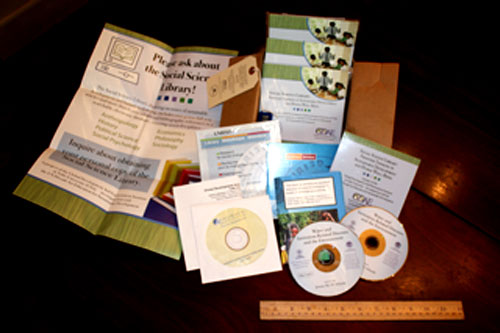
If your library receives the SSL, it will come in a cardboard packet that looks like this one.: It has a wealth of material in a 10 x 10 x 5 cm ( 5 X 5 X 2.5 inches) box.
In addition to a cover letter, a poster and descriptive brochures, each packet contains:
· A copy of the SSL on USB drive
· A copy of the SSL on 2 CDs
· 2 CDs of publications on sustainable development from UNRISD
Water in three states: liquid, solid (ice), and (invisible) water vapor in the air.: Clouds are accumulations of water droplets, condensed from vapor-saturated air. Iceberg between Langø and Sanderson Hope, south of Upernavik, Greenland.
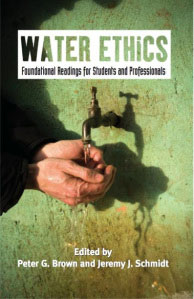
Peter Brown and Jeremy Schmidt’s book “Water Ethics” proposes “…that we will need to think about water ecologically - as something that binds us together in a shared and interdependent world - and which we must all steward together,” and “… for that the practical wisdom accrued through centuries of different cultural approaches to water management should form the basis for ecologically sound water sharing practices.”
“Water Ethics” addresses the importance of considerations of human rights, cultural beliefs, and ecological impacts. Rajendra Pradhamn and Ruth Meinzen-Dick write, “With scarcity has come greater attention to clarifying water rights as a way of mitigating conflict over water. The result has been competition not only over water itself, but also among different ways of defining water rights, and the underlying values and meanings placed on water.”
The Editors astutely introduce each section of the parts of the book which were written by authors who draw upon their diverse backgrounds in law, water management, agricultural and environmental sciences, water policy, international relations, economics and studies of religion and ecology.
This book provides a firm basis on which to expand the dialogue about “Water Ethics, and provides good ideas on which to build. The questions of the problems of water and health are not addressed in the detail I believe they need to be, nonetheless, it is an excellent resource and a good beginning.
This rather startling title is just that, a title meant to startle the reader into action to do what they can to help protect and save the fish of the seas. In this new book for kids and, I would add adults, its author, Mark Kurlansky, author of the award-winning bestseller Cod: A Biography of the Fish That Changed the World, writes about what is happening to fish, the oceans, and our environment, and provides examples of what, when armed with knowledge, kids can do about it. The author asks his readers to “imagine a planet with orange oceans, toxic seawater, and marine life that consists almost solely of jellyfish.” Imagine a planet with orange oceans, toxic seawater, and marine life that consists almost solely of jellyfish and calls for drastic measures to reverse the decline of fish populations.
As the publisher says of the book, it is “A children's book that explains, through both text and a graphic novel, the current crisis in the oceans, the frightening tragedy of a sea devoid of fish, the impact of that sad outcome, and how to prevent it.”
World Without Fish suggests ways to help save fish such as by supporting of sustainable fishing, urging the family to use Seafood watch guides that list the best choices of fish to eat and which ones to avoid, using the guides to discuss with parents and friends which are good fish to buy, and, to “never eat endangered fish like bluefin tuna.”
The book describes how the fish we most commonly eat, including tuna, salmon, cod, and swordfish, could disappear within 50 years, and the domino effect it would have - oceans teeming with jellyfish and turning pinkish orange from algal blooms; seabirds disappearing, then reptiles, then mammals. It describes the back-and-forth dynamic of fishermen and scientists. It covers the effects of industrialized fishing, and how bottom-dragging nets are turning the ocean floor into a desert.
Kurlansky interweaves fascinating details about sea life into his narrative about the importance of preserving biodiversity, “the presence of a wide variety of species,” from the ancient trilobites to the leatherback turtle.
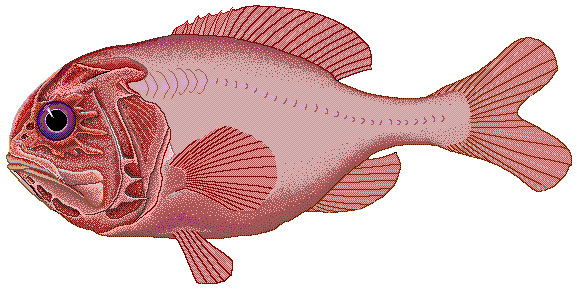
Roughy
Illustration by Robbie Cada from Wikipedia.
Telling about the tragedies of the seas, in a chapter entitled “Being the Sad, Cautionary Tale of the Orange Roughy,” Kurlansky writes: “Orange Roughy is a deepwater fish that was a popular restaurant item in the 1970s. At that time, no one understood that this species is very different from the other fish we commonly eat. Today, scientists estimate that the Orange Roughy lives for 150 years, which is at least five times as long as the lifespan of most of the fish we know. The problem is that it grows very slowly and isn’t capable of producing offspring until it is twenty years old, making it particularly susceptible to overfishing. Because we didn’t realize this in the 1970s, the Orange Roughy became one of the world’s most threatened fish within decades of being discovered.”
Interwoven within the book is a 12-page full-color graphic novel. Each beautifully illustrated chapter opener links to form a larger fictional story that complements the text.
Brimming with a wealth of useful information, the book covers a variety of crucial topics, such as:
Where to find sustainable fish
Line-caught vs. net-caught fish
The impact of oil spills, pollution, and debris on the marine environment
The history of fishing and how it became an industry
The effects of overfishing and global warming
Why jellyfish are the “cockroaches” of the sea
Kurlansky ultimately imbues this grave subject with an empowering, optimistic message: there is still time to save the marine environment if we act now. He includes a wealth of tips and guidelines to help us get started. As Kurlansky reminds readers, “Saving the planet takes a lot of work. But what could be more worthwhile?”
About the Authors:
Mark Kurlansky is a former commercial fisherman and the New York Times bestselling author of Cod, Salt, The Big Oyster, and other books. He’s won numerous awards, including the James A. Beard Award, ALA Notable Book Award, and New York Public Library Best Books of the Year Award. He lives with his wife and daughter, his favorite fishing companion, in New York City and Gloucester, Massachusetts. His website is www.markkurlansky.com.
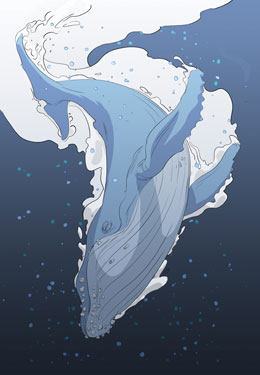
Frank Stockton is an artist and illustrator whose work has appeared in Esquire, The New Yorker, The New York Times, and Rolling Stone. He lives in Brooklyn, NY. Illustrations shown here are by Frank Stockton unless otherwise credited.
Ocean: An Illustrated Atlas by Dr. Sylvia Earle and Linda Glover Released by National Geographic Ocean: An Illustrated Atlas, by Sylvia A. Earle and Linda K. Glover just released (2009) by National Geographic offers state of the art maps of the ocean's sea floors including the areas of the newly designated National Marine Monuments. In this book readers are taken into the depths of the oceans Photo NOAA with over 100 maps including 5 especially created maps of the sea floor of the major basins with details never before seen.
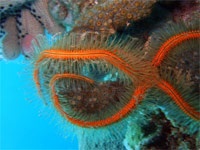
Earth's unique, forbidding ice oceans of the Arctic and Antarctic have revealed a trove of secrets to Census of Marine Life explorers, who were especially surprised to find at least 235 species live in both polar seas despite an 11,000-kilometer distance in between.
Representing the most comprehensive and authoritative answer yet to one of humanity's most ancient questions -- "what lives in the sea?" Census of Marine Life scientists on August 2, 2010 released an inventory of species distribution and diversity in key global ocean areas.
Scientists combined information collected over centuries with data obtained during the decade-long Census to create a roll call of species in 25 biologically representative regions -- from the Antarctic through temperate and tropical seas to the Arctic.
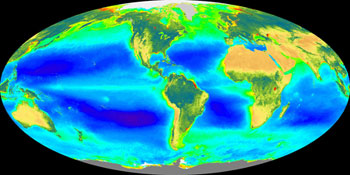
In this week's issue of the journal Nature, Monterey Bay Aquarium Research Institute (MBARI) chemical oceanographer Ken Johnson, along with co-authors Stephen Riser at the University of Washington and David Karl at the University of Hawaii, show that open-ocean microalgae obtain nitrate from deep waters as much as 250 meters below the surface. The finding will help scientists predict how open-ocean ecosystems could respond to global warming.
Please click on the title to go to the full article.
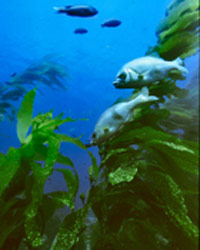
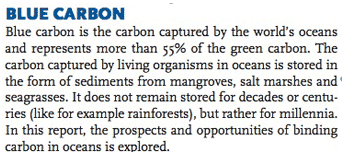
“Out of all the biological carbon captured in the world, over half is captured by marine living organisms hence it is called blue carbon.” Photo iStockphoto/Jan Rysavy
Seagrasses to Salt Marshes Among the Most Cost Effective Carbon Capture and Storage Systems on the Planet. A new Rapid Response Report estimates that carbon emissions equal to half the annual emissions of the global transport sector are being captured and stored by marine ecosystems such as mangroves, salt marshes and seagrasses. A combination of reducing deforestation on land, allied to restoring the coverage and health of these marine ecosystems could deliver up to 25% of the emissions reductions needed to avoid 'dangerous' climate change.




















 Courtesy Dr. Lauren Gerson, Stanford University School of Medicine.
 Hookworm in intestine.
 Pour-flush toilet in Thailand. Photograph by Jay Graham
 .jpg)
 The Sulabh twin-pit, pour-flush, compost toilet - a simple solution to achieve the Millennium Development Goal on Sanitation
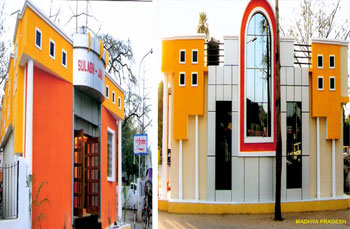 Views of the Sulabh Toilet Complex in Pradesh, India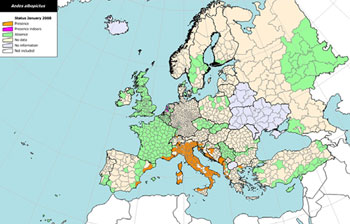
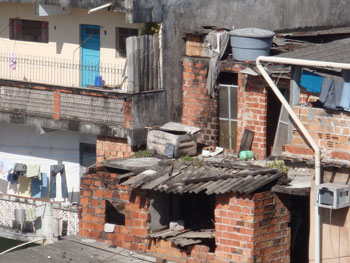 Water tanks in slum areas.
Photograph by Felix Lam
Water tanks in slum areas.
Photograph by Felix Lam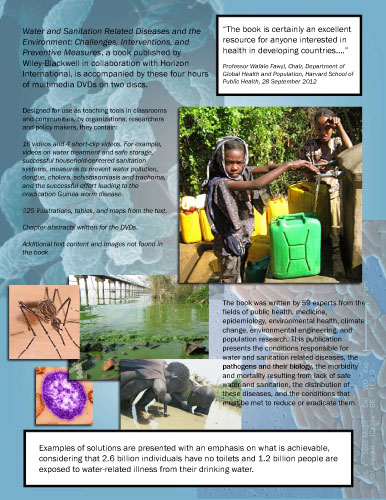
 Guinea worm eradication over time.
 Portable pipe filters.
Photograph courtesy The Carter Center/Emily Staub
Portable pipe filters.
Photograph courtesy The Carter Center/Emily Staub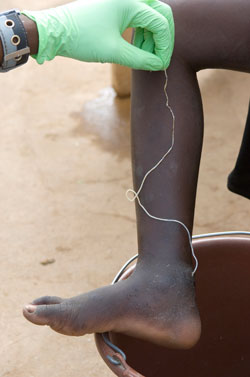




 About the Authors:
 Print a pocket-size Seafood Watch guide to take with you.